A Ugandan Single Mother’s Journey of Survival in a Large Scam Compound in Kampot, Cambodia


Author: Ssemuyaba Moses
Editor: Mina Chiang
Agnes is a Ugandan woman born in 1988, a single mother and a survivor of trafficking into a scam compound in Cambodia. Before her experience of trafficking, her life centred on working and raising her son. She had previously worked with MTN Uganda, the country’s largest telecommunications and mobile money service provider.
According to Agnes, her employment situation changed when her supervisor made sexual advances towards her and linked the renewal of her contract to her willingness to engage in a sexual relationship with him. Agnes refused and subsequently lost her job. As a single mother with a child to support, unemployment created financial uncertainty and forced her to look for another way to earn a living.
During this period, a friend approached her with an opportunity to work abroad. The job was described as computer-related work, specifically data entry, with a promised monthly salary of approximately USD 1,200. At a time when she was unemployed and trying to rebuild her life, the opportunity appeared to offer a possible solution to her financial difficulties. She had worked in Saudi Arabia as a housemaid, and she believed this time she was also travelling for legitimate employment. She said she paid approximately USD 800 to the agent who connected her to the recruiter through a recruitment Telegram group. She was told to travel using a tourist visa.
A Promised Job, a Different Reality
On 26 August 2025, Agnes left Uganda using Ethiopian Airlines and travelled alone through Ethiopia and Thailand before arriving at the old Phnom Penh International Airport, Cambodia. She was picked up and sent to the Kampot Province.
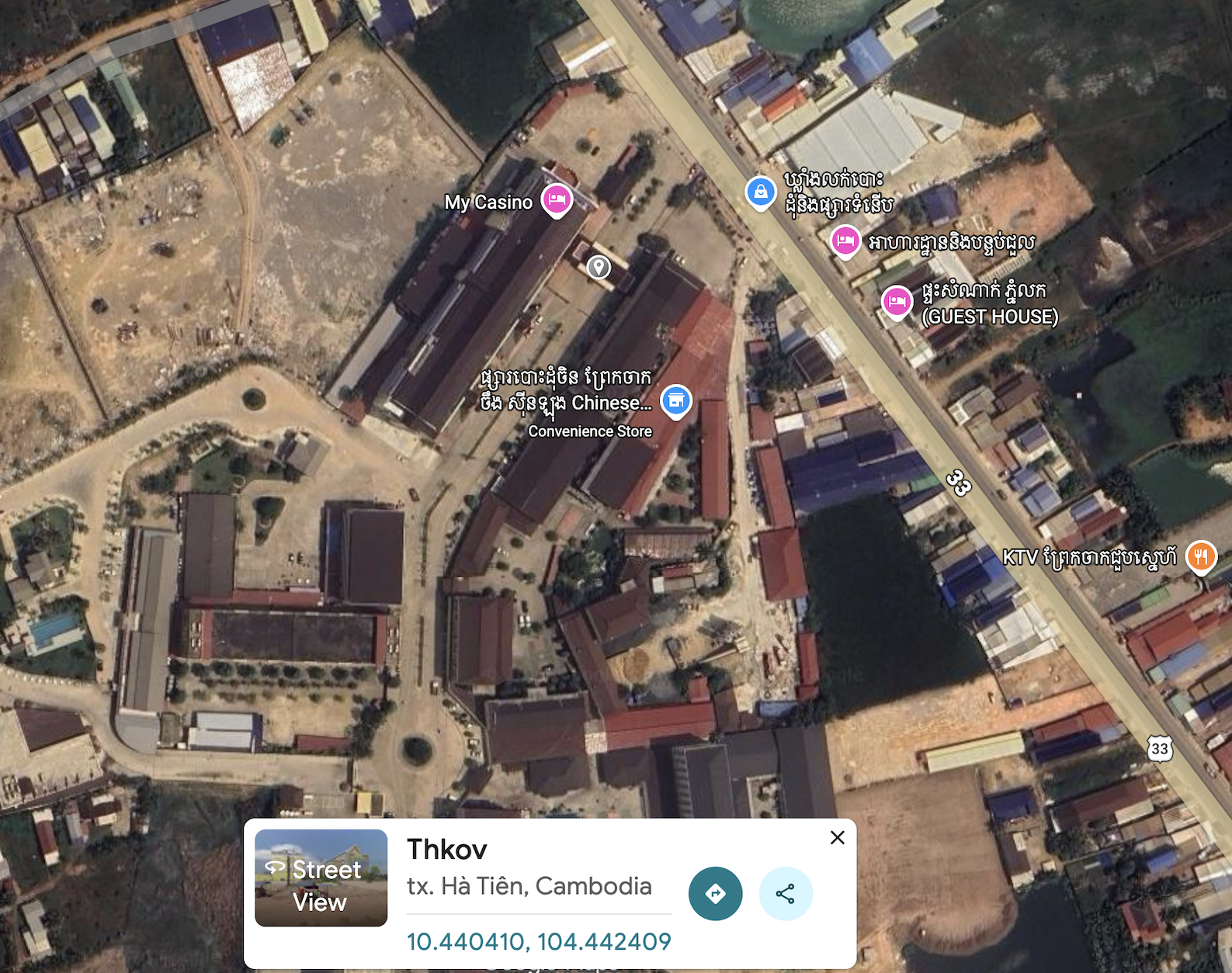
In Kampot, Agnes was taken to a compound along National Road 33 (NR33) and placed in Building One. The compound was not the ordinary workplace she had expected. Security was present, her freedom of movement was restricted, and she said her passport and phone were taken.
Agnes recalls meeting people from Pakistan, Kenya and Cameroon, among other countries, and estimated that thousands of people were working in the compound.
Inside the Scam Compound
Agnes received approximately three weeks of training in the scam compound. She learned how to communicate with people online, create false identities on Instagram and other platforms, and follow scripts provided by those supervising the operation. Workers used social media and messaging applications, including WhatsApp, Telegram and Facebook, to approach potential targets, build relationships and gain their trust. She realized she was not free to leave during the first month, after completing approximately three weeks of training. This was when she began to understand that the situation was fundamentally different from the employment opportunity she had been promised.
According to Agnes, potential targets included people in the United States, the United Kingdom and Canada. Personal information of the targets were obtained through Facebook Messenger using an organised sales platform that was used to collect contacts of citizens from different countries. Workers in the compound were also provided with WhatsApp and Telegram numbers belonging to potential targets and were instructed to send the first message, usually beginning with a simple greeting to start the conversation. Workers were trained to introduce financial or investment opportunities after establishing trust, including fake investment schemes and romance scams.
In her office, Agnes said workers conducting romance scams guided clients to purchase Bitcoin through digital wallets such as Cash App and transfer it to scam wallet addresses. She said she did not participate in collecting money from victims; the financial side of the operation was controlled by people higher up in the structure through a finance team run by Chinese workers.
The work was tightly controlled. Workers were expected to meet targets and worked approximately 13 hours a day under strict supervision. Agnes described threats, intimidation and punishment, including electric shocks against people who failed to meet expectations or resisted the work. She also said that people who refused to work or attempted to escape could be punished and detained in dark rooms. Weapons and security contributed to an atmosphere of fear.
Seeking Help and Returning Home
Despite the restrictions, Agnes tried to seek assistance. She contacted her family using a phone that a Ugandan man had hidden and attempted to reach organisations and authorities that might help her. She attempted to seek assistance from the Ugandan Embassy and the International Organization for Migration (IOM).
Agnes’s time inside the compound eventually came to an end on 15 January 2026. Her departure was connected to a Cambodian police operation or intervention following a raid on a neighbouring scam compound. She left with other people and eventually made her way towards Cambodia’s capital.
Leaving the compound did not mean she could immediately return to Uganda. Agnes received medical attention while staying in a shelter in Cambodia, and her situation was assessed. She was identified as a trafficking victim and, while staying in the shelter, received assistance from EOS Collective to obtain a flight ticket.
The repatriation process took several months. Agnes said she had to wait for the Cambodian government to waive her overstay fines before she could obtain permission to leave. She eventually returned to Uganda on 26 April 2026.
Her return marked the end of her physical presence in Cambodia, but it did not erase what she had experienced. She was home, yet the challenges that had existed before she left had not disappeared.
Rebuilding Her Life and Supporting Other Survivors
Agnes remains unemployed and continues to face the challenges of supporting her son as a single mother. Like many survivors, she must navigate the practical difficulties of finding work, earning an income and rebuilding her life after exploitation.
She is currently undertaking training to become a barista, developing practical skills that could help her find employment and regain economic independence. For Agnes, this represents the possibility of a livelihood and a more stable future for herself and her son.
She has also become involved with Phoenix Survivor Network Uganda (PSNU), a survivor-led organisation advocating for survivors’ rights. Agnes now volunteers with PSNU, contributing to awareness-raising, survivor engagement and broader efforts to address trafficking.
Her involvement is significant because survivors possess knowledge and experience that can contribute directly to prevention and support. Agnes understands how unemployment can create vulnerability, how a job offer can appear to provide a way forward, and how a recruiter can be someone the person already knows. She also understands the difficult process of rebuilding a life after returning home.
Today, Agnes is still rebuilding. Now, back in Uganda, she is trying to build a different future for herself and her son, based on new skills, survivor solidarity and the determination to begin again.
Note: The compound where Agnes was trafficked to, “My Casino”, has been covered in several news outlets, including Reuters. Reports stated that Cambodian officials described 6,000 to 7,000 workers leaving the compound when it was raided.